Saturday, March 7, 2020

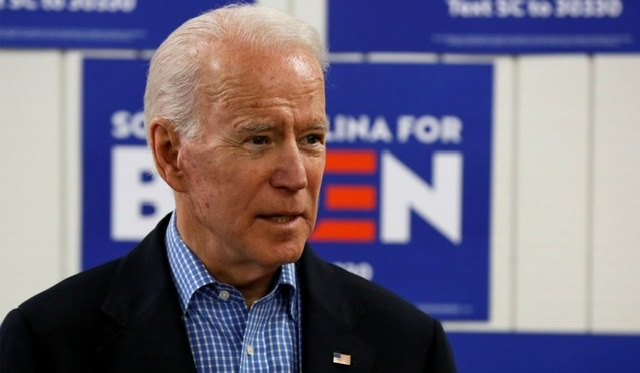
Okay.... It’s a two-man race. So, now what?

The deadline to change my voter registration from Republican to Democrat in New York was February 14, Valentines Day.  (See “It’s Official: I’m a Democrat”) When I did so, I didn’t expect the Super Tuesday massacre.  I switched so I could vote for Bloomberg in the New York Primary.  I could still do that.  But that would be the wasted vote I eschewed when I flipped parties.  So, now what?

In a Biden vs. Sanders race, the obvious choice for me is Uncle Joe.  But why?  A review of the candidates’ websites suggests their positions on the issues are the same:  reducing income inequality, higher taxes on the wealthy and corporations, universal healthcare.

Of course, their rhetoric on the campaign trail is something different.  Sanders is a class warrior, a dogmatic politician as divisive and out of touch as the President he would like to replace.  Biden on the other hand is more pragmatic — and, it’s that word “pragmatic” that separates him from other Democrats (and Republicans).  He has a long history of working toward bipartisan agreement.  A great example is outlined in Bob Woodward’s book “The Price of Politics” in which the award-winning journalist describes the process by which the Obama White House reached a compromise with a Republican Congress on the budget and debt limit in 2010.  Woodward’s book suggests that the joint effort on the part of Republicans and Democrats to break the impasse was floundering until Uncle Joe began working  with another old Senate hand, Mitch McConnell.  A series of convos and a handshake later, we had a budget compromise that lasted for years.  

Sanders hasn’t achieved anything like Biden’s track record.  Dogmatists rarely do.  They sit in their corner certain of their righteousness and refuse to compromise.  They never have to apologize because they never do anything.  In a democratic republic that relies on bipartisan legislation to achieve lasting change, Uncle Joe is the guy.  

So, what do these candidates want to achieve?  Sanders no longer calls himself a socialist in favor of the more current label Social Democrat.  He calls for the implementation of a regime of government benefits that emulates that of Scandinavian countries:  free healthcare, free tuition, mandatory paid family leave and so on.  

In theory, I don’t have a philosophical objection to this paradigm.  In practice, I do.  (I am more pragmatic than dogmatic.)  Sanders proposals — Medicare for All, Free Tuition, Student Loan relief — would easily double the size of the federal budget.  He says he’ll fund it by taxing corporations and billionaires.  Setting aside the economic impact of those policies for the moment (and they are substantial), I have to say I don’t believe it.  Ultimately, if not immediately, he’ll come for you and me — the middle class.  Think about it this way: if the goal is to eradicate billionaires, the tax base will shrink.   So, where will he go next?

I also have a moral objection to his approach.  If we — the electorate — want government to do certain things, we should be willing to pay for those things. It’s noteworthy that the US already has a more progressive personal income tax regime than any of the EU countries.  European nations offering free healthcare and college tuition impose a Value Added Tax (which functions like a sales tax) of about 20% on sales at a retail level no matter how rich or poor you are.  In other words, all citizens pay for what they ask from government. 

Sanders sidesteps this sticky argument by declaring the system is rigged (as does Trump).  Well, yes, it’s rigged in favor of those who work hard and play by the rules.  For those who think the world owes them a living, not so much.  As someone who scrimped and saved so my kids could graduate from college without debt, I wonder why others should not have to.  As someone who has assumed risks to my livelihood by owning a business, I wonder why anyone thinks they should reap the rewards without assuming the same risk.  

I am a classical liberal not a political liberal.  I believe in a freedom agenda: free enterprise, free choice and freedom to succeed or fail on one’s own merits.  That makes me more libertarian than liberal and that’s how I have voted in the past.  So, how do I square my beliefs with the concepts of social democracy?  

What few seem to understand is that the social democracy that Scandinavians enjoy relies on free market capitalism to be viable.  The remaining candidates (sorry to see you go, Mike) would impose new limits or costs on business.  In making such proposals, they take our prosperity for granted.  Treating corporate America like something that needs to be healed, they fail to see that every surgical cut to corporate profits undermines the attractiveness of the US economy to foreign investors, reduces available capital to invest in future endeavors and threatens to leave the patient bleeding to death.  I would like to see a candidate who adopts the approach implied by the Hippocratic Oath taken by doctors: primum non nocere (first do no harm).  

WHO WILL LEAD?

Thursday, February 20, 2020

A False Notion of Prosperity


This post was originally posted on the Rochester Beacon website on February 17, 2020 under the title Albany's False Notion of Prosperity.

The factors that made Rochester a bustling, growing center of economic activity in the 19th and 20th Centuries are no longer relevant.  Founded around a river that emptied into the busy shipping lanes of the Great Lakes and connected to the Port of New York by the Erie Canal and railways, Rochester was a shining light on the western frontier in the early 19th Century.  Its fortunes rose during the second industrial revolution as George Eastman founded Kodak, an enterprise that not only was a center of innovation but also attracted human capital.  

Our city has always occupied a middle space between urban centers like New York, Chicago and Los Angeles and rural company towns that rely on one major employer for their economic well-being.  In the last quarter century, Rochester has been treading water while manufacturers in company towns migrated their workforce to low-wage countries leaving them to the ravages of economic irrelevancy.  Some have taken matters in hand, embraced 21st Century industry and created conditions that promote prosperity.

__________________


At the end of every supply chain is a consumer.  We buy goods and services depending upon our whims and capacity of our wallets.  Companies competing for our dollars have moved us from cable TV to streaming video, from landline phones to mobile and from postage stamps to email.  The home cities of firms driving those changes benefit from the downstream effects of their success.  Those cities – Boston, Seattle, Palo Alto -- attract the attention of investors and the momentum of investments creates boomtowns.

It’s possible for smaller cities to become magnets for investment too. Chattanooga, TN (population 179,000) famously transformed itself from fading rustbelt casualty to tech center boomtown by investing $330 million to bring no-latency internet to citizens and businesses.  The non-profit Kauffman Center outlined three intertwined layers leading to the success of the initiative. The drive for 21st Century relevance began with the mayor’s vision of his low-cost-of-living hometown as a magnet for technology startups.  Abandoning the usual dogma of the left and right, business and government worked together cooperatively to obtain a federal grant to fund one-third of the project.  Not satisfied with “If you build it, they will come” city government sweetened the pie with financial incentives for I.T. professionals to move to their city.  Small though it may still be, Chattanooga’s metro area population has grown 11% in the last decade. 


Charlotte, NC – once the same size as Rochester and now two and a half times its size – attracted new businesses and jobs the old-fashioned way.  Lower taxes and proactive city and state governments worked for decades to make the city what it is today.  Rochester could duplicate that success.  We have a highly qualified workforce, entrepreneurial energy and an enviable array of colleges and universities. 

So, how do we New Yorkers (and Rochesterians) ensure we get a larger slice of the pie?  

A group of local business organizations has created ROC2025.  Describing itself as a “powerful new alliance of economic development organizations,” they have declared themselves in favor of Mom and apple pie.  It’s difficult not to support any of their initiatives:  workforce development, support for existing businesses, enhancing new business attraction and so on. But, in the end, we’re just whistling past the graveyard.  The overhead of high taxes, a heavy regulatory burden and a city school system that doesn’t graduate students prepared for the real world of work is simply too much for our local economy to bear.  

A prominent feature of Governor Cuomo’s administration has been economic development programs targeted at upstate New York.  And, for good reason.  The state only shows good economic results by virtue of the overwhelming success of Wall Street.  The governor took office as the nation (and Wall Street) was climbing out of the deep hole dug by the Great Recession.  So, while he loves to tout his record of having “created” over a million jobs during his reign, it is noteworthy that the rate of job growth is below the national average.  Also noteworthy is that over 70% of those new jobs were created in the New York metropolitan area.  

The non-partisan Citizens’ Budget Commission estimates the state spent roughly $10 billion on economic development in 2018.  Nevertheless, New York leads the nation in population loss.  Business interests and the conservative Empire Center claim the high tax and abysmal regulatory environment is the culprit (a claim with which I agree).  The governor claims it’s our lousy winter weather. Whatever the reason, it’s fair to say that so-called investments by government haven’t created a booming upstate New York economy.  

Government is unduly influenced by special interests and even the best and most ethical participants are unlikely to get it right for one big reason: They don’t have their own money invested in the enterprises they endeavor to help.  As for the enterprises, those seeking money from the government would rather spend the taxpayers’ money than their own as they should or would otherwise.  

Economic prosperity is rooted in private capital invested in promising enterprises.  Rochester could create the conditions that enabled Chattanooga’s success with local leadership embracing a vision and seeing it through.  But that vision, whatever form it takes, would be undermined by a state government addicted to the notion prosperity should  and can only be enabled by central government.  

WHO WILL LEAD?

Thursday, February 6, 2020

Mitt Romney has his Spartacus moment

Kirk Douglas as Spartacus

I awoke this morning to the headlines that Trump had been acquitted, Romney was the sole Republican voting for his impeachment and Kirk Douglas had died.

In Douglas’ most famous role, he plays the escaped Roman slave Spartacus.  Based on a true story, Spartacus led a slave revolution in ancient Rome.  In the film’s climax (spoiler alert!) – probably not true – the Roman General who defeats Spartacus’ army gives all the slaves the opportunity to be spared if they point out the real Spartacus.  First, one soldier and then another and then all of them stand and declare “I’m Spartacus.” They all heroically choose to die rather than give up their hero.

Yesterday, Senator Mitt Romney (R.-UT) had something of a reverse Spartacus moment.  Choosing principle over political expediency, he stood up in the Senate and voted to convict a president of his own political party.  No Republican stood with him. 


I’m something of a movie nut.  So, I was reminded of a different Kirk Douglas film (my personal favorite).  In it, Kirk plays the role of an old-fashioned cowboy resisting the march of time in the 20th Century.  The film’s title says it all: Lonely Are the Brave. 

WHO WILL LEAD? 

Monday, February 3, 2020

It’s Official: I’m a Democrat

Everyone I know describes themselves as “fiscally conservative and socially liberal.”  And, yet, neither political party ever gives us a candidate who fits that description.  I asked a veteran of political campaigns why.  She said, “there aren’t enough of you.”  And, she’s right.  Suburban swing voters like me constitute about 20% of the electorate.  

When I moved to Deep Blue New York, I registered as a Republican reasoning that would be closest to the center.  Along the way, I began voting for Libertarian candidates (fiscally conservative; socially liberal). Many people consider a third-party vote to be a wasted vote.  But, in a state where all the electoral votes always go to one party, all votes are wasted votes.  I first expressed my frustration in a guest column last year (Stranger in a Blue Land: The Plight of a Political Moderate).

What knocked me out of this rut was Michael Bloomberg’s announcement that he’s running for President.  A politically moderate party switcher like me, I wonder if he could make a difference in deadlocked Washington.  And, in the primaries, my vote matters. 

Like many Americans, I was shocked at the 2016 election results.  Initially, I believed that establishment Republicans would keep Trump in check.  But those who spoke up were punished at the ballot box.  And, so, those who remain support a morally reprehensible, irresponsible president whose destructive behavior will echo for years or, perhaps, decades after he leaves office.  

I could remain in the Republican Party if it was true to its values.  But the days of fiscally responsible, small government Republicans are over.  The 2017 tax bill is great for the upper and middle classes.  But it also leaves us with trillion-dollar annual deficits. 

Mike Bloomberg
There’s some scary stuff on the other side of the aisle too.  The party of “free stuff” would eliminate capitalist prosperity in the name of social justice.  The Green New Deal would reverse a century of economic progress. And, social democracy is merely the act of taking money from those who have earned it honestly and giving it to those who haven’t. 

Enter Michael Bloomberg.  His views on gun ownership and climate change mirror my own. Will all his ideas be enacted or, if enacted work?  And, where will the money for all these great ideas come from? I can’t say for sure.  While it’s easy for me to point to the flaws in proposals from Sanders and Warren, it’s difficult for me to imagine that a self-made billionaire might not understand business and economics.

And, so, I am leaving the party of no ideas for the party of bad ideas. I confess it’s not very comfortable over here.  But, for now at least, I think it’s the right thing to do. 

WHO WILL LEAD?

Tuesday, January 21, 2020

The Young Doctor Has It Wrong


This post first appeared as a column in Rochester's daily newspaper the Democrat & Chronicle on Sunday, January 19, 2020.

A guest column in this newspaper by a medical student, Toby Terwilliger, makes a case for Medicare for All (M4A) – an unsubstantiated case.  He begins by referencing the high cost of medical care in the U.S. and its relatively poor outcomes.  So far, so good.  He projects current costs of $4 trillion annually will rise to $6 trillion by the end of the decade.  He declares that M4A will reduce costs by $500 million per annum, a figure he has plucked from Senator Elizabeth Warren’s website.  Unfortunately, he fails to make a case as to how those costs and outcomes might improve under M4A.  M4A will add $3 trillion to annual Medicare costs if and only if reimbursements are reduced to a level below the cost of providing the services according to an often-cited study by a former trustee of Medicare under presidents Bush and Obama.  Otherwise there would be no savings.

Mr. Terwilliger bases his conclusion about the high cost of healthcare on a simple premise that our “healthcare industry puts profits over patients.”  That’s speculative at best.  The Kaiser Family Foundation projects that annual per capita Medicare spending will increase by 5.1% compared to 4.6% for private insurance over the next decade.  Eliminating profit from the system won’t reduce costs.  It never does.  The profit motive drives efficiency and lower costs.  

This is not only true of consumer products and services but also medical procedures. In an unregulated environment, the cost of cosmetic surgery has not increased as fast as consumer prices over an 18-year period according to The American Society of Aesthetic Plastic Surgery.  Meanwhile, medical inflation drove up the cost of healthcare by 177% or more than triple the rate of overall inflation.  

A study by the non-profit North Texas Clinically Integrated Network, Inc., an Accountable Care Organization created under the auspices of the Affordable Care Act, cites eight key drivers of cost.  First among them is the “Fee For Service” (FFS) payment system which “generates a strong incentive for driving up the volume of tests and services.”  Any reform of our health insurance system that doesn’t include a shift from FFS to a value-based system will fail to address our high cost and poor outcomes.  


In a guest column I wrote for this newspaper last year, I laid out four principles essential for effective healthcare reform: (1) universal coverage, (2) reform the FFS system, (3) price competition and (4) cost-sharing.  Rolling out M4A would not address the last three of these principles and would inevitably lead to higher costs without necessarily improving outcomes.  

Mr. Terwilliger demonizes CEO’s who earn millions from the profits of the healthcare system.  But it’s doctors who have benefited most from FFS.  In the days when doctors made house calls, the automobile known as the “doctors’ car” was a Buick not a Mercedes-Benz. 

WHO WILL LEAD?

Tuesday, January 14, 2020

Further Future: a 21st Century Economic Model -- Part 2

This is Part 2 of 2.  To read Part 1, click HERE.


No discussion of economics can exclude current hot button topics: income inequality, free trade, immigration and the urban/rural divide.  In the aggregate, the free trade regime promoted by every administration since Nixon’s breakthrough China policy has contributed to US economic growth.  The law of comparative advantage (first defined by David Ricardo, a disciple of Adam Smith) has been demonstrated to have the desired effect.  The US advantage in professional services, global management and innovation has served us well, creating high paying jobs in urban centers – New York, Silicon Valley, Chicago, Dallas, etc.  Unfortunately, the benefits are not universally available to everyone.  Or, to put it another way, no matter how many jobs are created for international tax experts in New York, none of them are going to be filled by a worker who has lost his job in a North Carolina furniture factory.  

In his book “The Future of Capitalism,” British economist Paul Collier proposes that we change the redistribution model.  Rather than tax the rich and give to the poor, he would have us adopt an “agglomeration tax.”  Mobility is critical to economic growth.  From the time of the Pilgrims, people all over the globe have fought to immigrate into the U.S. to take advantage of the economic freedom our social contract allows.  Within the U.S., migration between regions and from rural to urban centers is an indicator of economic success.  (That’s why the European Union adopted the Schengen Agreement permitting migration across national borders.)  Our economic growth has been driven by this agglomeration, particularly in the era of free trade.  Collier points out that not everyone benefits from their move to the big city.  Demand for housing and other retail products and services renders the cost of living much higher than outlying areas.  Those whose incomes fail to rise to the level necessary to offset the higher cost suffer.  Those whose income growth outstrips the higher cost thrive – investment bankers, lawyers, Silicon Valley entrepreneurs.  Collier’s agglomeration tax would take from the latter category and pass it on to rural communities to offset the economic damage.  

At first blush, this proposal might seem to make sense.  But redistribution hinders prosperity no matter how you design the formula.  And, in any event, such a proposal would be politically infeasible. 

The key to prosperity begins with capital formation.  If you don’t have the dough in your bank account to start a business, you have to attract investors.  And, investors are attracted to the prospect of great returns.  For government to fulfill its social purpose, it must create the conditions that attract private capital.  On the whole, the U.S. does a great job of this.  Indeed, our economic prospects rely upon our ability as a nation to attract Foreign Direct Investment (FDI).  

On a smaller scale, communities can only succeed by obeying the law of attraction.  Companies are attracted to friendly regulatory and low tax environments.  This may sound to you like an “old saw” from an old conservative (and it is!).  But that doesn’t make an invalid statement.  I’ll point to two examples of small cities who have overcome the impediments to economic development.  

Chattanooga, Tennessee famously bet the farm on high speed internet in 2010.  City government recognized that the path they were on would lead to the same type of failure experienced by other small manufacturing communities.  A $330 million project -- beyond the reach of the city’s budget, funded by $111 million from the federal government with the balance coming from municipal bonds issued by the city -- enabled the city to create no-latency internet service to any and all businesses and households.  The city has thrived by attracting high tech startups to its low-cost-of-living, superior-infrastructure setting.  More recently, the Lehigh Valley region of  Pennsylvania has begun its recovery from the shuttering of its steel plants by more traditional means.  Offering tax credits and abatements and promoting development of office parks was only the beginning.  The New York Times reports that recent economic development efforts are centered on development of urban centers to attract Millennials, featuring restaurants, bars and cultural centers.  


The critical element in these two stories is local initiative.  Attracting both federal grants and private investment is the prototype for small cities to thrive.  New ventures and established companies that will create jobs and young professionals who will settle, pursue careers and raise families is the key to success.  

States like New York, lacking the wisdom and fortitude to lower taxes and reduce regulation, make the mistake of substituting government funding for private capital.  The imposition of social criteria and friction costs reduce returns and ultimately fail the communities they endeavor to help.  

Local communities can learn from the successes of Chattanooga and the Lehigh Valley and create their own economic development strategies.  Strong communities keep talent at home, promote new ventures, support established businesses, improve city schools and create programs to train the workforce and provide transportation to where the jobs are.  

New habits, creative approaches and public buy-in are challenging.  For communities to succeed, its leaders – corporate, government and non-profit – must unite behind a common vision and convince the public to support it.  It won’t be easy; but it’s got to be done.

WHO WILL LEAD?

Monday, January 13, 2020

Further Future: a 21st Century Economic Model -- Part 1


The last half of the 20th Century bred more than a few superstar economists.  Even those who are not students of economics have heard of Milton Friedman, Paul Krugman and Paul Samuelson.  Columbia University professor of economics Mark Skousen has a different threesome in mind.  In his book “The Big Three in Economics,” he argues on behalf of three who have the most lasting effect on our economic thinking:  Adam Smith, Karl Marx and John Maynard Keynes.  That each of them lived and worked in three different centuries is no accident.  It is, rather, a measure of how long it takes for breakthrough economic theories to take root and have lasting effect on the societies that embrace them.  

While Smith (18th Century) and Marx (19th) might be posed as polar opposites, Keynes (20th) proposed a blend of free enterprise and government using fiscal policy to affect economic outcomes.  (We are now more affected by the monetary theories of Milton Freidman.  But he didn’t make Skousen’s cut.) 

The NY Times profiled an economist who endeavors to have that kind of effect on the 21st Century.  Mariana Mazzucato -- born in Italy, raised in the US and teaching in London – would like to change “how society thinks about economic value.”  Eschewing the now tired debate that frames the free market and government as opponents, she points to the Internet, GPS and the silicon chip of examples of how government research has enabled free enterprise to flourish and society to benefit.  She also suggests that the political left is “losing around the world because they focus too much on redistribution and not enough on the creation of wealth,” according to the Times.  Her theories have been embraced by politicians of both parties who declare themselves to be capitalists but want government to be more active in achieving economic outcomes.  Elizabeth Warren would double federal R&D to “Create and Defend American Jobs”.  Meanwhile, Senator Marco Rubio (R-FL) has published a treatise outlining how the federal government should steer capital to favored industries. 

It would be easy to fall into the usual tribal debate about Dr. Mazzucato’s ideas – the libertarian right vs. the socialist left.  But the dogmas of either side don’t hold up under scrutiny.  It’s hard to argue that capitalist Silicon Valley startups enabled by Wall Street money haven’t created jobs, prosperity and the follow-on effects of both.  It’s also hard to argue that government didn’t play a role as technology from both the Defense Department and NASA is at the core of all digital businesses.  (The GPS system on which we all rely is still operated by the US Air Force.)

So, the question isn’t whether government research can benefit the economy or not.  It is rather where should we draw the line?  Mazzucato, Warren and Rubio would have the federal government not only directing research dollars according to social goals they deem beneficial but also extending government investments into the (no longer) private sector.  The paradigm they propose is not without precedent.  Countries as diverse as Japan, China and the former Soviet Union have created industrial policies to guide the economy.

There is no question that government can play an active role in wealth creation.  However, Dr. Mazzucato (as well as Senators Warren and Rubio) draw the line in the wrong place.  It’s certainly true that the iPhone wouldn’t exist without silicon chips, the Internet and GPS.  It’s also certainly true the federal government would never have invented the iPhone.  So, I would stop at having government invest in companies that will bring innovative technologies to market.  There’s plenty of private capital to make that happen.

Indeed, the digital technologies brought to fruition by government agencies had no commercial purpose when they were invented.  They enabled those agencies to pursue their objectives.  Silicon chips supported the space program.  GPS supports the US military. 


By contrast, the Obama administration invested in green technology to enable private enterprise to achieve a beneficial outcome.  The creation of the Advanced Research Projects Administration – Energy (ARPA-e) under the Department of Energy was meant to mirror DARPA, the Defense Department agency at the heart of the development of digital technology.  It has granted over $1.5 billion to 580 projects.  Many of these projects were highly speculative and haven’t borne fruit.  However, a select few have attracted $1.8 billion in private sector investments. In other words, the government invested in research where the private sector wouldn’t and, much like digital technologies, the private sector has taken the results and developed products that are market ready.  The greatest successes have come from the improvement in cost and efficiency of both solar panels for power generation and battery technology for electric vehicles.  So, it can be shown that the DARPA/ARPA-e model can be translated into commercial success.  

As for its social purpose, the results are a mixed bag according to Investors’ Business Daily.  The adoption of alternative energy throughout the US has resulted in a doubling of the percentage of total energy generated from alternative sources since the turn of the century.  However, in that time, U.S. consumption of energy from fossil fuels has remained about the same according to the Congressional Research Service.  Similarly, while there has been a boom in sales of electric and hybrid vehicles, the environmental benefits have been offset by the increased sales of SUV’s, this despite powerful financial incentives to buy electrics.  So, in the case of environmental technology, it might be said that government research has contributed to a green future but those who might benefit – the voters – have undermined our success. The game’s not over, of course.  More than 40 years elapsed between the invention of the silicon chip and the creation of the iPhone.  Few would have predicted it.  So, we shall see what the future holds when the future happens.  

End of Part 1 of 2 parts