Showing posts with label Paul Ryan. Show all posts

Monday, January 7, 2019

Broadband… AOC… Pelosi… Ryan… WTF!

No, you don’t have a right to broadband Internet
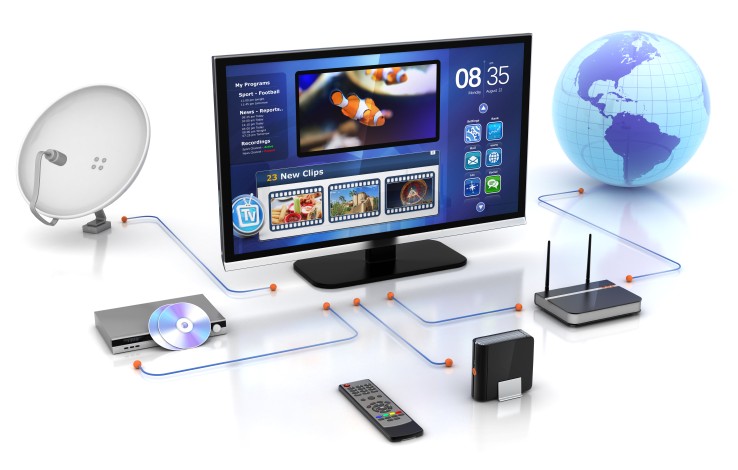

Like anything, once the majority has something, everybody wants in.   The Wall Street Journal reports House Democrats have cobbled together an infrastructure proposal that includes “$40 billion in ‘direct federal funding to connect all of America to affordable high speed Internet.’” Meanwhile, in a report titled “If you think you have issues with your broadband internet, you’re not alone,” our local paper reports on the frustration of those who have eschewed an urban/suburban lifestyle, moving to rural counties where they are unable to get a consistent broadband connection.  

With scant attention to the cost of extending broadband to areas where it would be underutilized, the article tells us of the misfortune of the poor folks looking for five acres of land where they can raise chickens and bees without sacrificing their connection to cyberspace. A group advocating for extending broadband service, promotes the idea that broadband is “a utility now and we need universal access.”  The article closes with a quote from a frustrated schoolteacher saying, “Internet is no longer a privilege… it’s a right.”  The statement makes a now common error by confusing goods and services with “rights.”

To be clear, goods and services are not the same as human rights.  They may be (and generally are) unequally distributed.  For example, few rural communities have big shopping malls, big name entertainment or five star restaurants.  Rights, on the other hand, must be distributed equally.

Let’s not confuse the efforts to ensure equal rights with the desire to socialize the cost of providing services to those who can and do make informed choices. 

AOC

From the “Much Ado About Nothing” department comes a 12 second video of youngest woman ever House member Alexandria Ocasio-Cortez (now dubbed AOC by the media, social and otherwise). Like almost everything, the video is at ground zero in the culture wars and is likely to remain there for at least a few more seconds.

Of greater concern to me is the Paul Krugman defense of AOC’s suggestion of top tax rates of 70 or 80%. How else will the government pay for free everything – healthcare, college education, whatever?  Citing studies done by Peter Diamond and Christina Romer, he uses a marginal utility analysis to explain why rates that high wouldn’t matter.  He fails to mention that Diamond’s study was done in the 1960’s when the highest rate, 91%, was lowered to 70%.  Nor, does he mention that Romer was run out of the Obama administration after its first year because she dared advocate that higher rates would dampen economic growth.
Nancy Pelosi (left) and AOC (right, no not really)

Pelosi and Ryan

So, long as I’m taking shots at politicians, I’ll close with some observations about two oft-mentioned names.

It’s fair to say that Nancy Pelosi’s politics are way too liberal for me to even contemplate.  I set that aside yesterday watching CBS’s Jane Pauley interview her.  There was one word that occurred to me at its end: resiliency.  She dismissed the target placed on her back during the recent campaign season saying, “once you step into the arena” you should expect it. She further asserted she would “go home” once her “mission” was accomplished and not before.  She sets a great example for young women – at least for those who venture forth from their safe spaces.

While my head is still spinning, I should point to one of my former heroes, Paul Ryan. Once the stalwart advocate of both low taxes and a balanced budget, he has departed Washington with a legacy that reflects neither.  As perhaps the most well informed member of leadership during two years of Republican control of government, he leaves us with a tax reform that is a mixed bag of good and evil along with a $1 trillion dollar annual deficit.  

I’m having a WTF moment. 

WHO WILL LEAD?

Sunday, April 8, 2012

Precious Dollars

My last post (One Issue and One Issue Only) stimulated a variety of responses. Many fell into the “Right On!” category; others were more circumspect. Over lunch, one of my readers commented that “every dollar in the federal budget is precious to someone”. That’s a great insight. It explains why pollsters tell us that the vast majority of Americans agree we should balance the budget but few agree that we should cut something that affects them – Social Security or the home mortgage deduction, for example.


Many self-described liberals reacted negatively though none challenged the economics. One described the post as “more blah, blah, blah”. Others merely asserted that I “must be for” raising taxes, eliminating the Bush tax cuts or reducing defense spending. I was a bit taken by surprise as I didn’t intend the post as a political statement but rather a brief on economics. I believe the economics are important because we are sitting on a ticking time bomb.

Sometime late this year or early next, Congress will have to approve another increase in the debt ceiling. Almost simultaneously, the Bush tax cuts will expire – not just those on the rich but the middle class as well. The last debt ceiling deal requires that mandatory cuts be made across the board unless a new deal can be made. So, we will have a sharp increase in taxes accompanied be a dramatic reduction in government spending. In the context of today’s political environment, it’s hard to envision a solution.

If you’re into shock therapy, you may think this will be a good thing for us. However, the abrupt cessation of government deficits is likely to be a shock to the economy, leading to massive unemployment and stalled growth.

It’s easy to buy into the theory that one cannot get out of debt by taking on more debt. It sounds logical. But, an economic collapse will likely result from putting it into practice. We have seen evidence of this in Greece, Ireland and Spain.

It is better to come up with a plan for sustainability that adjusts the current course over time. The President recently submitted his idea to Congress in the form of a budget for fiscal 2013. It was rejected by, not only Republicans, but also every Democrat in the House of Representatives – a vote of 414 to 0.

There are other approaches. Congressman Paul Ryan (R-WI) has put forth his Roadmap for America (see, Every Dogma Has Its Day). It was the basis for his 2013 budget proposal. Now the Chairman of the House Budget Committee, Ryan’s budget proposal has lost some of the bi-partisan approach evident in the original Roadmap.

There is much to criticize in the Ryan budget plan. MIT's Simon Johnson points out that, while Ryan would make substantial cuts to government expenditures, he does little to “stabilize revenues”. He also points out that the Ryan plan is regressive. That is, it cuts substantially from programs that affect the poor. All of that said Ryan does get us on the path to fiscal sustainability according to the bi-partisan Congressional Budget Office.


A more bi-partisan approach was taken by the President’s own commission. The National Commission on Fiscal Responsibility and Reform (often called Simpson-Bowles) first met in April of 2010. Their charter was, according to the President, to identify “policies to improve the fiscal situation in the medium term and to achieve fiscal sustainability over the long run”.


Alan Simpson
Recently, the commission’s co-chairs, Alan Simpson (former Republican Senator) and Erskine Bowles (former Clinton chief of staff), were interviewed by Charlie Rose. Simpson joked that his wife noted the “lilt” in his step of late. She said it was because he had finally pissed off everyone in America instead of just a few.

He cited cuts that his bi-partisan commission recommended to student loans, Medicare, defense spending, farm subsidies and veterans benefits. There were increases in gas taxes and the elimination of tax deductions that would affect the middle class.

The plan was criticized by those on the left (Paul Krugman, Nancy Pelosi) who don’t want cuts to government programs and the right (Defense contractors, the American Enterprise Institute) who don’t want to see taxes increased.

Those who occupy the middle of the political spectrum (including me, see "Why I Like Ike") were more friendly, viewing it as a starting point for compromise (Third Way, Concord Coalition).

Personally, I remember being hopeful when the commission’s report was released. I thought perhaps the President would take up the banner and fight the good fight as he had promised – the “grand bargain” he has called it. I wrote about it in a blog post the morning of last year’s State of the Union address (see "Adam Smith: Communitarian").

Everyone will hate getting to a balanced budget. Simpson was only half joking when he talked about pissing off everyone one in America. But, perhaps that is the only way this will work – if everyone makes a sacrifice.

So, how do we get out of this mess? There is only one answer in my view: presidential LEADERSHIP.

Apologists for our current President will point out that the Republican opposition won’t pass anything the President proposes. But, didn’t both Clinton and Reagan have their way with a Congresses of the opposing party? And, didn’t George W. Bush get anything he wanted from a Democratic Congress – the Iraq War, the Patriot Act, the tax cuts?

Has our current President abandoned the hope of his “grand bargain”? Is he capable of leading the nation to a more sustainable course? Is it time for a change?

WHO WILL LEAD?