Remember hanging chads? You know, those pesky little half-punched-out cardboard holes in presidential ballots during the 2000 recount… Well, I remember them well because I lived in the Florida swing district at ground zero of the controversy. Florida was then and still is a swing state, voting with the winning presidential candidate in the last five quadrennial contests. I felt more comfortable voting there because candidates in swing states have to appease moderate voters to get elected. In fact, I recall voting in the 2010 off-year elections for the Democratic candidate for governor, an independent for U.S. Senate and a Republican for the House of Representatives. In fact, I have always lived in swing states. Before Florida, there was Pennsylvania, Colorado and New Jersey – yes, New Jersey was once a swing state as was New York when I grew up here. (Remember Nelson Rockefeller?)
All of this came back to me recently as I pondered why I am so unhappy with New York State politics. Embedded deeply in ‘Blue’ ideology, the Democrats who now control state government endeavor to run the table with the headline ideas of their national party while complaining that a governor of their own party holds fast to a 2% cap on annual tax increases. The debate boggles my mind. New York consistently rates at or near the bottom in the Tax Foundation’s Business Tax Climate Index. Why aren’t we reducing taxes?
Seeking validation that I am not off my rocker, I recently took the political typology quiz on the non-partisan Pew Research website. (Seventeen ‘either/or’ questions, 3 minutes – try it!) I landed smack dab in the middle of the nine categories from left to right -- ‘New Era Enterpriser.’ No wonder I’m a swing voter.
Then, of course, there are the presidential elections. I am not a Trump voter, but neither will I vote for any Democrat who promotes radical ideas like free tuition, Medicare for All or the Green New Deal. Of course, if you live in a Deep Blue (or Deep Red) state, it really doesn’t matter for whom you cast your presidential vote. All the electoral votes go the candidate who wins the most individual votes – in New York, that will be the Democrat.
So, what’s a swing voter to do?
While I was pondering our choices in 2016, Bill Clinton convinced me to vote third party. Bill Clinton?you say. Yes, Bill Clinton. In a podcast promoting the candidacy of his wife –With Her– he pointed out that voting third party or even not voting sends a message to the major parties. They feel compelled to figure out how to win you over, he asserts. If only…
WHO WILL LEAD?
What I’m Reading
Carole Cadwalladr, a reporter for the British newspaper ‘The Guardian,’ writes about delivering a TED talk about the transgressions of Big Tech while Sergey Brin, Mark Zuckerberg and other Silicon Valley big shots were in the room… NY Times columnist David Brooks writes about experiencing one’s ‘annunciation moment,’ the time when “a new passion is silently conceived…” Joseph Antos and James Capretta of the American Enterprise Institute discuss how to achieve universal healthcare coverage without Medicare For All.
I was briefly a conservative hero in a sea of liberals last week. The occasion was an assembly convened by the Rochester People’s Climate Coalition and sponsored by both the Sierra Club and the Rochester Chamber of Commerce. The guest speaker was Bob Inglis, a former South Carolina Republican Congressman whose awakening to the dangers of climate change got him primaried out of his seat after serving 12 years.
Inglis is evangelizing for a bipartisan bill called the Energy Innovation Carbon Dividends Act (EICDA). It’s a carbon tax that’s positioned as nota tax increase because all the proceeds will be rebated to taxpayers in a monthly check. Acting kind of like a universal basic dividend, it would also be redistributive. If you’re a rich person who owns a limo, a Ferrari and a Gulfstream, you’ll pay a lot in carbon taxes but get the same amount as a minimum wage worker who takes the bus to work.
Inglis started by polling the audience and I found myself as only one of three people holding up my hand. We three were right-leaning and believe we should do something about climate change. And, so I was briefly a hero to the radical lefties in the room. I was thanked and congratulated and should have felt good about it. But, instead, I found myself, in my pin-striped suit and tie, feeling like a prize pig at the county fair – emphasis on pig.
I was invited to the event by Abigail McHugh-Grifa, the interim director of the coalition. She and I co-authored a piece in Sunday’s Democrat & Chronicle (D&C), using “he said; she said” style to portray a casual conversation between friends about climate change, the EICDA and the Inglis event. It was intended to be cute and I think it was. Here’s an excerpt:
He: I’m sorry, Abby. But I’ve never had a good answer to this question: How are you going to pay for that?
She: Although people won’t like the idea of rising costs, that’s the point of a carbon price, so we shouldn’t tiptoe around that. However, we should also consider that the cost of burning fossil fuels does not reflect their true cost to society in terms of public health and climate impacts. Polluters continue to pollute while taxpayers pick up the bill for disaster relief and increased healthcare costs.
It was not an in-depth debate. The D&C’s 475-word limit leaves scant space to explore one point of view much less two. But it’s worth noting that there’s some Milton Freidman philosophy embedded in Abby’s response. In the web series Freidman Fundamentals, he explains libertarian philosophy (1-minute video) and defines the point at which government must intervene as when “a company is imposing a cost on me for which I am not being compensated.” And, indeed, to the extent that burning fossil fuels emits pollutants that affect my health or to the extent my taxes contribute to the healthcare system, I am not only not being compensated but also paying the socialized cost of damage created by others.
Still, there are reasons to be skeptical. A website called ‘New Scientist’ claims there is no link between CO2 increases and global warming. Another ‘The Conversation’ questions the logic of the standards set by the Paris climate agreement. But every scientist you talk with will qualify their comments by saying climatology is not their expertise. Meanwhile, the climatologists on the International Panel on Climate Change say we have reached the “gold standard” of certainty that climate change is man-made, and we must do something about it.
My background is not science; it’s economics. So, my concern is focused on what we do, how we do it and what it will do to our economy. Disruption is expensive and the cost must be borne by someone. In Germany, the push toward alternative energy coupled with a ban on nuclear has led to a 50% increase in energy costs to consumers. That would be politically infeasible in the U.S. and would undermine the effort before its goals were achieved.
Many people support conversion to nuclear energy as France has done. The most concise economic argument I’ve seen was made by the Wall Street Journal in a piece titled ‘The Nuclear Option is the Real Green Deal.’ But I worry what happens at scale. How would we handle the amount of waste water created at 100% nuclear?
Many are concerned about solar at full scale too. So, I asked a local solar installer how much land would be required to be 100% solar. “One eighteenth of North Dakota,” came the reply without hesitation. That’s about one half of 1% of the U.S. land mass or slightly more than half what the federal government leases to the oil and gas industry. He sent me a study to back it up.
In the end, I come down in favor of the EICDA not because it offers a perfect solution but rather because it doesn’t create a government mandated plan. It simply disincentivizes burning fossil fuels by raising the cost of doing so, leaving free enterprise to innovate solutions.
As for Inglis’ presentation… Well, he exhorted our left leaning audience to approach those on the right with language more likely to lead to constructive dialog. “Innovation not regulation” was his catch-phrase. That’s a good place to start, in my view. As for the event itself, it failed to move the needle primarily because Inglis was preaching to the choir. The better audience would have been made up of politically moderate business leaders, perhaps convened by the Chamber of Commerce rather than the climate coalition.
WHO WILL LEAD?
PS my twins were born on Earth Day in 1973, hence the title of this post. Happy Birthday, Peter and Dan!
I was invited to be a guest on Connections, a weekday talk show on WXXI, Rochester's NPR affiliate. The show is available as a podcast, a link to which is included in this post. This essay was published in the Rochester Beacon. Click HERE to read the original piece.
The TV character MacGyver once said, “Desperation tends to make one sort of flexible.” I think of it whenever WXXI radio host Evan Dawson reaches out to me to come on his show, “Connections.” I am reliably conservative, and he likes to present a balanced perspective. But I am a minor figure in Rochester with little expertise in anything. Why else would he reach out to me unless he’s desperate?
John Calia
“Connections” is like an oasis in the desert if you crave intelligent discussion rather than screaming insults. Dawson doesn’t facilitate debate so much as moderate a discussion. He leans to the left politically but is fair-minded. He relies on data to inform opinion; so, I knew I had to be well-armed when he asked me to discuss New York taxes. The state budget had just been approved with some new taxes on the wealthy but without others that were the favorites of so-called progressives.
I was a guest along with Jeremy Cooney, former chief of staff to Mayor Lovely Warren and recent Democratic candidate for state Senate, and Michael Kink, executive director of the Strong Economy for All Coalition. I predict Cooney will be a successful politician simply because he is so engaging in a face-to-face encounter and pragmatic in his approach to policy matters. Kink, on the other hand, is a liberal firebrand.
The rapid-fire Q&A that characterizes discussion shows doesn’t play to my strengths. Following the show, my thoughts about the experience fell into one of three categories: 1) what I said that felt right, 2) what I could have said better and 3) what I didn’t get a chance to say.
I arose early on the day of the scheduled broadcast and skipped my trip to the gym so I could do some research. I wanted to broaden the context of the conversation. My supposition is the issue isn’t taxing the wealthy but rather a bloated state budget that undermines the economic success of our state.
Data point number one: Florida has 1.75 million more people than New York but its state budget is only $88 billion (as opposed to New York’s $175.5 billion). I then quoted Paul Wetenhall from his recent article in the Rochester Beacon. A former Xerox executive who moved to Rochester in 1975, Wetenhall is now an economic development professional in Charlotte, N.C. Generally, he described how North Carolina government works with business toward productive ends. More specifically, he laid out the structural challenges that New York must address. For example, the cost to educate a pupil in the Rochester area is about $17,000 while Charlotte manages to do the same with only $11,000. Charlotte must be doing something right. Over the last 40 years, its population has more than doubled while Rochester’s has only increased 10 percent.
The mention of Charlotte got the discussion off-script for a while. Kink waxed poetic about North Carolina’s embrace of philosophies and policies that emulated those of New York when it was indeed the Empire State. If I didn’t know better, I would have thought he is a Rockefeller Republican. Alas, he is not. At least four times, he characterized wealth as “immoral” and “obscene.” Neither our host nor my fellow panel member challenged this assertion. It was left to me to point out that doing so characterizes “the engine of our prosperity” as evil. Earning money and having wealth is not, in and of itself, evil. It is power that corrupts. Our state government aggregates power by taking money out of the economy and creating criteria by which we might get it back. That’s “immoral” and “obscene.”
I wish I had I asserted that not only is the process immoral but the practitioners to whom we trust this task are often convicted of corruption. There should be a dedicated wing in state prison for former New York legislators.
I didn’t get a chance to say that the new state budget includes a plethora of new taxes aside from those levied on the rich. For example, a new tax on online sales will cost consumers $390 million this fiscal year. Meanwhile, the governor doles out unproductive economic development funds by the millions. An example is the Pinnacle North development in Canandaigua. The taxpayers contributed millions to an environmental cleanup of the site, a liability that would normally have been borne by the investors. The governor (who was campaigning for reelection at the time) told us this is the kind of project he would “invest in all day long” because it would provide about 100 low-paying service jobs. But, where did the funds million go? Answer: into the pockets of the investors. A more recent example is the state’s $4 million “investment” in Hickey Freeman.
In my closing remarks (too late to explore), I was able to point out that the U.S. already has the most progressive tax code among the nations of the seven largest developed countries. I didn’t get a chance to provide the data substantiating that claim, detailed in a 2018 Wall Street Journal op-ed. The article noted income data reported by the U.S. Census Bureau doesn’t include the impact of non-cash transfers. Consider:
Medicare and Medicaid pay $760 billion to the bottom 40 percent.
93 other programs transfer $520 billion to low-income households (CHIP, TANF, SNAP).
States transfer another $310 billion
The bottom 20 percent of U.S. earners receive 84 percent of their income from taxpayer-funded transfers. The next 20 percent receives 57 percent of their income the same way. Overall, 28 percent of household income in the U.S. is received from the government, a percentage larger than any other country in the OECD except France. The top 10 percent of U.S. taxpayers earn 33 percent of total household income and pay 45 percent of taxes, a ratio of 1.35 times their income. In Germany, the ratio is 1.07. In France, it’s 1.1. The U.S. collects only 35 percent of taxes from non-income sources, the smallest share of OECD countries. All those countries have a value added tax (VAT), which acts like a national sales tax. To close the $1 trillion annual federal deficit, Americans would have to pay an 8 percent VAT.
Off air, Dawson and I casually discussed the attraction of moving to a low-tax state like Florida.
“The difference in my tax burden would send us on a European vacation each year,” I told him.
“Yeah,” he joked. “But if you move to Florida, you’d have to buy a boat.”
So, what would you want to spend your retirement income on? Paying taxes or owning a boat?
“I think he showed us how it’s done.”My lunch companion was a 30-year-old Yale grad, an up-by-his-bootstraps denizen of Rochester’s inner city with political aspirations.He was talking about Donald Trump and how the left would defeat him.I confess I am not very glib.That’s why I write this blog.It may take me a dozen drafts over 4 or 5 days to concisely express my opinion.So, my response to this young progressive was… wait for it… nothing!I was dumbstruck.
I’ve always thought that society’s reaction to our boorish, prevaricating president would be a return to civility. But my young friend was spot on as last year’s elections proved. Using the Twitterverse as a platform, the AOC contingent (if I may call it that) became ascendant. And, their success has brought outrageous ideas (70% marginal tax rates, Green New Deal) into mainstream media discussion. Like Trump, AOC has become the “brand” of her party according to Peggy Noonan. Her essay (Congress’s Mean Girls Are Trump’s Offspring) in the Wall Street Journal asserts, “[t]hey believe that to be enraged is to demonstrate seriousness. It is to show that you understand the urgency of the moment, even if others don’t.”
Still I wonder where the line of acceptable behavior is drawn. I guess it’s somewhere on the spectrum of nasty women who make their living by being, well, nasty. Samantha Bee is okay, but Kathy Griffin is not. There’s a line between them somewhere, right?
Following President Trump’s election, I was astounded at the public reaction of those who supported his opponent and thought she had it in the bag. His outrageous behavior, boorish manners and policy lunacy was outmatched by street protests, hate-filled messages and the media’s obsession with him. “He’ll be reelected because liberals will overplay their hand,” I would tell anyone who would listen. Not many did. And, now, I am not so sure I was right.
Hatred has transformative power. It can make the innocuous into the menacing. And, menace provides moral empowerment, which in turn leads to totalitarianism. In a conventional society, laws are designed to protect people and their property. In a totalitarian society, laws are designed to move society toward utopia. Successful extremists can always define utopia. One extreme would have us erect barriers to free trade and reject immigrants while the other would open our borders and exercise government control over private enterprise. The reaction by each cohort is to accuse their opponents of either being Nazis (Hitler) or socialists (Lenin). Those who gain political power by conjuring hatred can and will do whatever is necessary to achieve their goals (as both Hitler and Lenin showed us).
America desperately needs leadership that stands for sanity and moderation, not demagoguery. Those whose political fortunes rely upon judging, lecturing and disdaining may resonate with a segment of the public but not with the “Exhausted Majority.” Despite the best efforts of the media, most people do not follow politics with rapt attention. They are more concerned about paying their rent and the rising cost of healthcare and sending their kids to college.
The question now is how to get the genie back in the bottle.
WHO WILL LEAD?
What I’m reading
Economist Brian Beaulieu says we’re in the third phase (Caution!) of the economic cycle. We may be on the precipice of recession – or maybe not…. In a 1 minute 43 second video, the Hoover Institute provides an alternative to a carbon tax called "Low Carbon Pollution Standards"…. David Brooks of the NY Times tells us that the media have become scandal mongers (once the province only of tabloids).
It’s old news now but I’ve been thinking about the mob that semi-attacked Tucker Carlson’s home last fall. If so-called progressives want to be the anti-Trump, shouldn’t they stop behaving like the anti-Christ?
I just finished reading Stephen Hawking’s book, “A Brief History of Time.”I confess it’s a challenging read for a non-scientist.However, Hawking was much more than a scientist and mathematician. He reveals himself to be a moral philosopher as well. Throughout his detailed discussion of how science evolved from Copernicus to Einstein and beyond, he points to how religion has historically explained what science could not and how the advances of the last half of the 20th Century explained so much that it has diminished the role of religion in society.Similarly, it has diminished the role of philosophy (perhaps a greater loss). What had been promoted by great moral thinkers from Aristotle to Kant has been lost now that we know how the universe works. In the last chapter, he quotes 20th Century philosopher Ludwig Wittgenstein as saying, “The sole remaining task of philosophy is the analysis of language.”
The disappearance of philosophy from our public discourse may explain why, instead of having a clear understanding of what’s right and wrong or moral vs immoral, we now focus on rules of behavior and the politics of reallocating capital.
So, where are we headed?
The Chinese government has created a “social credit system” to build trust on the basis of compliance with social norms defined by the central government. Americans don’t need the government to impose one. We impose it on ourselves. Shaming is a national pastime. American companies – who have two strikes against them just by existing – can trip the switch from adored to reviled in the blink of an eye. We’ve seen it happen to Uber, United Airlines and Facebook among others.
It doesn’t take a large majority to create a movement. Very vocal extremists can affect electoral outcomes and now occupy seats in Congress. Much like the pastor of a small Orlando church created an international crisis of terrorism by threatening to burn a copy of the Koran (see “Is that what Jesus would do? Really?”), a small cohort with a resonant hashtag, armed with a meme or two, can create a social movement. Think of #blacklivesmatter, #MeToo or #icebucketchallenge.
On the one hand, this phenomenon is a sign of a strong democracy. Social media provides a platform for small voices to be heard. A lonely voice may become a force for social good when a large enough chorus mobilizes for change.
On the other hand, it has bred what Arthur Brooks calls a “culture of contempt.” And, media profits by its proliferation. Social media provides a platform for outrageous claims and behavior while mainstream media – particularly cable news – profits by reporting it, analyzing it and discussing it ad nauseum. What divides us now is language and how issues are framed.
Are high taxes a way to enable social benefits or confiscation of private property?
Is abortion just ending a pregnancy or is it killing a child?
The way one answers those questions inflames our tribal passions.
Aristotle believed that a virtuous society was the result of the works of good people. Good works must be defined on the basis of a set of principles embraced by nearly all citizens. As the influence of religion and philosophy have faded, we are no longer guided by a set of generally accepted principles. Rather, we focus on rules of behavior. And, we disagree vehemently about what those rules should be. So, conservative speakers are hounded from college campuses, bureaucratic failings lead to boycotts of corporations; and, the voices of extremists yield public discussion of radical ideas as though they are reasonable.
George Orwell’s great book “1984” reinforced Wittgenstein’s description of philosophy in the 20th Century by creating new additions to our language: Newspeak, Thought Police, Groupthink, etc. We now capture those concepts under the umbrella of “political correctness.” Here’s a description of Newspeak from his book:
“The purpose of Newspeak was not only to provide a medium of expression for the world-view…, but to make all other modes of thought impossible. It was intended that when Newspeak had been adopted once and for all and Oldspeak forgotten, a heretical thought … should be literally unthinkable...”
So, is it 1984 yet?
WHO WILL LEAD?
What I’m reading
For a perspective on how Republicans can address climate change check this out from The American Enterprise Institute: Carbon tax most efficient in tackling climate change… And, while I’m on the subject, check out this opinion piece from the WSJ: The Nuclear Option is the Real Green New Deal… Bill and Melinda Gates run a foundation in their names tackling global challenges. As broad as their perspective is, they still get surprised from time to time. Check out their blog post “We Didn’t See This Coming.”
Even among those who think President Trump is wrong, oh so wrong, about nearly everything, there is a grudging admission that some of his observations about China are correct. “China is eating our lunch!” They have subsidized their own industries while creating obstacles to US companies wishing to enter their markets and they steal our intellectual property. If Trump can make progress on those issues, he will have served us well.
But it’s China’s long game that troubles me. They are likely to make concessions to Trump because the global trade paradigm feeds their coffers. In spite of the capital flight of recent years, China still has over $1 Trillion in US Treasuries on deposit in the Bank of China. They are using that capital to fund a long-term strategy to build a China centric supply chain with outposts in developing nations hungering for foreign investment. In addition, they are investing in military technology to bypass the US as our military budget has declined precipitously since 2010.
Americans tend to take our global hegemony for granted. The US long game from its founding was Manifest Destiny, expanding the nation from one coast to the other and extending our buffer zones across two oceans. It took about 150 years to achieve this position and the commitment of Cold Warriors to maintain it. We’ve been so secure for so long that we can’t imagine it might change nor can we imagine impact when it does. Now, that hegemony is in jeopardy as a defense strategy based upon aircraft carriers and foreign military bases is undermined by American withdrawal, reduced military budgets and foreign powers investing in asymmetric capabilities like cruise missiles and cyberwarfare.
Enter Senator Marco Rubio (R-FL) who now proposes a China style national industrial policy for the US. He would protect American manufacturing, restrict capital flows and change the tax code to incentivize technology companies to invest in R&D. Senator Rubio might be looking at how Japan used its industrial policy to become the world’s second largest economy over 40 years following WWII (they are third behind China now). But it’s noteworthy that policies that worked well during their rise from the ashes have not served them well since. The senator should also brush up on economics. Comparative advantage still works. Competing with China in manufacturing may sound nice to American labor unions; however, our real advantage is in technology and innovation. And the best way to support innovation is for government to get out of the way.
A better (non-Trumpian) approach would be to create economic alliances with China’s other competitors, such as India, South Korea and Japan and to invest in military technology to counter China’s cyberwarfare military expansion. We should also expand our economic development initiatives in Africa, the continent most likely to grow economically in this century. Initiatives of this nature won’t fit into the brevity of an American electoral cycle. For the U.S. to play a long game to counter China, a president will have to clearly define our strategy (Manifest Destiny 2100?) and work to gain bi-partisan support. Such a plan must include strategies for economic development in the U.S. that will rebuild communities through investment in infrastructure, education and workforce development. Failing to do so will undermine political support for such an initiative in the long term.
Unfortunately, I don’t expect such long term thinking or leadership to emanate from the current resident of the White House.
WHO WILL LEAD?
What I’m reading…
… "A Brief History of Time by Stephen Hawking”: I was inspired to read it in the wake of the author’s death. Now, I’m not sure I’ll make it to the end. I haven’t studied physics and math since college and wonder why I should start again… “Reimagining Mobility: A CEO’s Guide”: a report from global consulting company, McKinsey & Co., describes how autonomy and electrification will affect automotive transportation over the next decade or two… “Is the Campus Free Speech Crisis Overblown?”: an opinion piece in the Wall Street Journal featuring comments from college students on the topic.
The Poll
Well, the poll favors the short form of essay that I’ve experimented with since the beginning of the year. (It’s still open if you’d like to vote.) However, the vote was close, and my wife voted for the short form. Maybe we should disallow her vote since she’d just like me to shut up. What do you think?
By now, you have no doubt heard that New York City, co-winner of the Amazon lottery, blew it by so alienating Amazon’s corporate management that HQ2 of the world’s most valuable corporation will not be located within the five boroughs.Opponents of HQ2 decried the $3 Billion tax giveaway cobbled together by the city’s mayor and the governor.Of course, they were giving away something that they weren’t going to get if Amazon didn’t choose New York in the first place and won’t get from someone else any time soon.
I am empathetic to the forces that succeeded in rejecting Amazon. Their primary motivation was to preserve their community in a city where gentrification has left few neighborhoods affordable for middle- and working-class families. They could see events trending in the direction of San Francisco and Seattle and didn’t like what would happen.
On the other hand, Republicans and center-left Democrats understand that economic growth relies upon innovation and efficiency created by high tech enterprises. The high-skilled, highly paid labor that HQ2 would attract would increase the city’s tax base and beget other high-tech enterprises. Bowing to the whims of a minority of citizens enabled by a handful of extremist politicians is a mark of how incompetent our political leaders are.
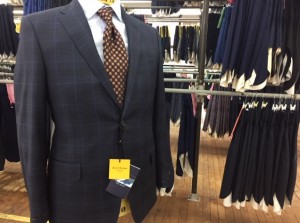
Not noticed nationally but a big story here in Rochester was a $4.2 Million private investment in Hickey Freeman that was nearly matched by $4 Million from the state. It was hailed by one and all because it retains a handful of low skilled jobs in a failing enterprise. There’s enough bad news here to make it difficult for me not to toss my cookies. I’ll try to control my gag reflex long enough to unpack it.
The Hickey Freeman news is just the latest example of Blue State Folly. The state has taken money out of the economy and reinvested it in businesses that can’t attract sufficient capital on their own. In this case, they’ve invested in a company that makes clothing for the WWII generation rather than allowing the free market for capital to do its work.
The state’s investment was made through the Finger Lakes Upstate Revitalization Initiative established by one of our governor’s famous contests. (I wrote about the perversity of taking money out of the economy just so we can compete to get it back in the Rochester Business Journal when the winners of a similar competition were announced.)
Like New York City, San Francisco and Seattle, Rochester has a highly capable workforce and business leadership with the technical skills to support any innovative enterprise owing to the legacy of the vanishing Kodak and Xerox. We are supported by a local network of more than a dozen colleges and universities and have a low cost of living. What holds us back is high taxes and a state bureaucracy that makes it difficult to operate a business.
Our greatest challenge is to continue our legacy into the next generation. Unlike New York City, we are not threatened by gentrification but rather by its opposite. We may be unable to thrive unless we, as a community, can do something about a failing school system and inner-city poverty. Perhaps the governor should focus on that for a while.
Something happened while I wasn’t paying attention. It was a slow, subtle shift that took place over many years. Consider this: the death of Elvis was barely a footnote on the evening news when it happened in 1977. When Michael Jackson died, some three decades later, it was the lead story for days. What happened? How is the death of a pop star the most important news of the day? Any day? What has this manifested?
Well, here’s an example: an actor I’ve never heard of who stars on a show I’ve never watched is accused of making a false police report alleging he was attacked by the evil forces of #MAGA. Aside from feeding the #fakenews narrative of our prevaricating president, the event has made me wonder what’s happened to our society. Perhaps if we weren’t so focused on Pop Culture, the foolish acts of a C-List actor wouldn’t be national news.
What I’m reading
Tom Freidman speculates we may become a “Four-Party State” in his weekly column in the New York Times. I hope we are…. David Houle writes in his blog about the social and economic effects of Millennials and Digital Natives (those born since 1981) now outnumbering Baby Boomers… Economist Greg Ip writes in the Wall Street Journal about the “Unrealistic Economics of the Green New Deal.”