“Should Jon Stewart Have Called the President ‘Dude’?”
Question posed by WSJ.com, the website of the Wall Street Journal
It was extraordinary. With only six days left till the mid-term elections, the President of the United States, POTUS to his friends, appeared live on Jon Stewart’s Daily Show. The “Fake News” program has risen in the ranks of media to this lofty position. And, Stewart did, indeed, call the President “dude”. Personally, I think “His Dudeness” would have been more appropriate. But, that title was taken by the Big Lebowski and I would hate to have the image of Jeff Bridges in his boxers and robe in my head when thinking of the President.
But, the grand finale of his week of live TV in DC was not his chat with the President; it was the “Rally to Restore Sanity and/or Fear” held on the Washington Mall on Saturday. The event was also broadcast live on the Comedy Channel. It was mostly music and typical Comedy Channel stuff – a few laugh out loud jokes interspersed with a few hundred not funny jokes. But, Stewart had a serious intent as well. Not wanting to take sides in the culture war, he went after the press.
“The press can hold its magnifying glass up to our problems bringing them into focus, illuminating issues heretofore unseen or they can use that magnifying glass to light ants on fire and then perhaps host a week of shows on the sudden, unexpected dangerous flaming ant epidemic.”
That was one of the LOL moments. It’s funnier when you hear it than when you read it.
That 200,000 people showed up is not just a measure of Stewart’s impact as a comedian but rather a measure of how he has become an arbiter of, well, sanity.
It wasn’t always this way. Mark Twain is often given credit for being America’s first “humorist”. He had a way with a one liner. But, his comments were not personal in nature. In a sense, his lines were simply proverbs with a barb. Proverbs have been around for centuries. “A fool and his money are soon parted” was written by Thomas Tusser in the 16th Century.
In the century before Twain, Ben Franklin was prolific in the same form:
“Well done is better than well said.”
So, while Twain added politics to the form, he didn’t change the form itself:
“Suppose you were an idiot, and suppose you were a member of Congress; but I repeat myself.”
Even Will Rogers, who sounds funnier to our more modern ears, didn’t really get personal:
“A fool and his money are soon elected.”
It wasn’t until after WW II that things started to turn personal. Here’s Bob Hope:
“I don’t know what people have against Jimmy Carter. He’s done nothing.”
More contemporary is Jay Leno:
“According to New York publishers, Bill Clinton will get more money for his book than Hillary Clinton got for hers. Well, duh. At least his book has some sex in it.”
But, Stewart has taken the form to a whole new level. His event, in some part, might have been called a “Rally from the Back of the Classroom”. All that was missing was the spitballs. However, the underlying thrust was quite serious. The country has serious problems and the numbskulls in government enabled by the media are not addressing those problems.
“Not being able to distinguish between real racists and Tea Partiers or real bigots and Juan Williams… is an insult, not only to those people but to the racists themselves who have put in the exhausting effort it takes to hate…”
Post event, Stewart and his partner in crime, Steven Colbert, denied any intent besides pure entertainment. Smart move! If they had expressed a grander goal, they would no doubt be excoriated for their ambition. The better tactic is to sit back and let the message sink in. We’re mad as hell and we’re not going to take it anymore. But, to maintain our own sanity, we know you have to laugh or you’d cry.
In a sense, Stewart has become a LEADER. By filling an obvious void, he has demonstrated that there is an appetite for something other than the insanity that our political parties – or the Tea Party – offer us. He has shown us an opportunity. Who will step into the breach? Or to put it another way, WHO WILL LEAD?
Tuesday, November 2, 2010


Saturday, October 30, 2010
An Election Weekend Special Edition
“It’s time for a center right party that is truly fiscally conservative, truly believes in limited government and is truly socially liberal. A party that is interested in reaching the Center as much as it is in reaching the Right.”
- Dennis Sanders, blogger at www.bigtentrevue.org
However, this weekend I am stumped on one big issue. So, I am posting this a bit off schedule. Why? Because I need your answers to a question to inform me before I go to the polls.
By way of background, I should tell you that most of my friends and colleagues are Republicans. I am a businessman and that’s who I hang around with. So, over these last few weeks, I have asked many of them this question:
The pollsters have been telling us that the nation’s voters are center-right. Specifically, they are fiscally conservative and socially liberal. So, why is it that Tea Party, right wing conservative Republican candidate, Marco Rubio, is leading independent, fiscally conservative, socially liberal, Charlie Crist, in the polls in one of the biggest swing states in the country?
Most of the answers I get are incomprehensible. Not that I don’t understand what the responder is saying. Just that the responses make no sense.
Got a clue? If so, I want to hear from you. Please scan down to Comments to leave your reply.
And, no matter what you think, please vote on Tuesday, November 2.
Monday, October 25, 2010
It Doesn't Sound So Loonie to Me.....
"Both Parties seem to be infected with, among other maladies, an acute case of Not Invented Here-itis…."
David Hay, Chief Investment Officer of Evergreen Capital Management
I have endeavored to bring a new twist to each topic as I write this almost weekly blog. However, this week I feel compelled to bring you the writings of other bloggers more famous than I (which is almost everyone).
Among my readings is a weekly newsletter published by John Mauldin. He is a conservative economist with a compelling writing style, making complex concepts digestible for the lay reader. Last week’s letter from Mr. Mauldin incorporated a letter from his colleague, the Chief Investment Officer of Evergreen Capital Management, David Hay. My blog today will provide you with a link to Mauldin’s letter. So, technically we have a blog within a blog within a blog. To read it, click HERE.
Here are a few teasers. Did you know that our northern neighbor, Canada, was in worse fiscal shape than we are in the mid-1990’s? Did you know that they have now produced 11 years of balanced budgets? Neither did I. What was I doing in 1995 when the Wall Street Journal declared that Canada had become “an honorary member of the Third World in the unmanageability of its debt problem”? Who knows? I only know I wasn’t watching when they began a remarkable turnaround. How bad was it?
The Canadian dollar was known as either the “Loonie” after the bird on its dollar coin or the “Northern Peso”.
The government accounted for 53% of the country’s GDP.
Government debt was 120% of GDP or about twice the level of the US today.
The Canadian turnaround is perhaps the most remarkable economic achievement of any industrial economy since WWII. The new Canadian budget reduced spending by 8.8% over two years while reducing federal employment by 14%. Corporate tax rates were reduced by roughly 30%. Personal income and capital gains taxes were cut and a Value Added Tax (VAT) was implemented to cover the revenue lost by other tax reductions.
What were the results? Drum roll please…. The federal budget was balanced within three years and federal debt dropped to 45% of GDP.
Admittedly, there a few salient points missing from Hay’s summary. Canada fixed its problems during a booming decade for the global economy. And, they were aided by the passage of NAFTA which resulted in US car companies moving much of their production to Canada. They did so because the Canadian taxpayer picked up the tab for healthcare. They are still the country from whom we import the most goods and services (not China). Exporting economies have much less to worry about than importers like the US.
Still, when you look at what they have accomplished compared to our own domestic quagmire, you have to ask, WHO WILL LEAD?
David Hay, Chief Investment Officer of Evergreen Capital Management
I have endeavored to bring a new twist to each topic as I write this almost weekly blog. However, this week I feel compelled to bring you the writings of other bloggers more famous than I (which is almost everyone).
Among my readings is a weekly newsletter published by John Mauldin. He is a conservative economist with a compelling writing style, making complex concepts digestible for the lay reader. Last week’s letter from Mr. Mauldin incorporated a letter from his colleague, the Chief Investment Officer of Evergreen Capital Management, David Hay. My blog today will provide you with a link to Mauldin’s letter. So, technically we have a blog within a blog within a blog. To read it, click HERE.
Here are a few teasers. Did you know that our northern neighbor, Canada, was in worse fiscal shape than we are in the mid-1990’s? Did you know that they have now produced 11 years of balanced budgets? Neither did I. What was I doing in 1995 when the Wall Street Journal declared that Canada had become “an honorary member of the Third World in the unmanageability of its debt problem”? Who knows? I only know I wasn’t watching when they began a remarkable turnaround. How bad was it?
The Canadian dollar was known as either the “Loonie” after the bird on its dollar coin or the “Northern Peso”.
The government accounted for 53% of the country’s GDP.
Government debt was 120% of GDP or about twice the level of the US today.
The Canadian turnaround is perhaps the most remarkable economic achievement of any industrial economy since WWII. The new Canadian budget reduced spending by 8.8% over two years while reducing federal employment by 14%. Corporate tax rates were reduced by roughly 30%. Personal income and capital gains taxes were cut and a Value Added Tax (VAT) was implemented to cover the revenue lost by other tax reductions.
What were the results? Drum roll please…. The federal budget was balanced within three years and federal debt dropped to 45% of GDP.
Admittedly, there a few salient points missing from Hay’s summary. Canada fixed its problems during a booming decade for the global economy. And, they were aided by the passage of NAFTA which resulted in US car companies moving much of their production to Canada. They did so because the Canadian taxpayer picked up the tab for healthcare. They are still the country from whom we import the most goods and services (not China). Exporting economies have much less to worry about than importers like the US.
Still, when you look at what they have accomplished compared to our own domestic quagmire, you have to ask, WHO WILL LEAD?
Monday, October 11, 2010
Let’s Put the Washington Back in D.C.
“Guard against the impostures of pretended patriotism.”
-- George Washington
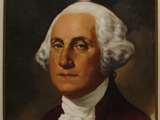
Most people know that our first President, George Washington, played a critical role in keeping the union from splitting apart. He was well respected by both the industrial north and the agrarian south. Were it not for his leadership, the United States may not have survived as a single country.
What few remember from their history lessons was Washington’s support of a treaty which made a truce with the British in the first decade of our republic. It was controversial because following the Revolutionary War, the British continued to attack our commercial shipping and occupied posts in the Northwest Territory.
Nevertheless, our first president knew that the flood of immigrants from Europe would continue to press our borders westward. The British presence there would eventually lead to another war. He also knew that, with the treasury weakened by debts owed to foreign governments from the country’s recent victory, the U.S. could not win another war with the Brits.
The treaty called for reduced maritime commerce by U.S. merchant ships; however, the British would abandon their western forts. It was highly unpopular. Many in Congress called for a declaration of war. The public was outraged. The treaty’s author, John Jay, was stoned in public. Protests spread throughout the land. Pamphleteers, the cable news pundits of their day, urged “a speedy death to General Washington!”
President Washington was resolute. The treaty opened up the western territories and their economic possibilities and gave the U.S. time to build up its treasury to prepare for the British war that he knew was inevitable. When it happened in 1812, we were ready.
Washington’s courage and leadership was missing when the House passed the Currency Reform for Fair Trade Act last week. It seems that we have entered the silly season on Capitol Hill. It’s only a month before the election and who would run the risk of not voting for a bill that penalizes the Chinese for their unfair practices. No one involved really believes that passage of this bill will bring jobs back from China. When China allows its currency to appreciate (yes, I said when not if), low skill manufacturing jobs will go to other low wage countries like Vietnam and Indonesia. They will not come back to the U.S.
But, the public needs a villain and better a foreign power than a politician running for reelection. The bill, if enacted, would have the effect of a tariff on Chinese goods. (All this talk of tariffs and balanced budgets reminds me of Herbert Hoover!!)
The U.S. is still the world’s largest economy, most powerful military player and influential society. This won’t last if we continue to behave as though it’s still the Twentieth Century. It’s time to start looking forward and plan according to our current reality.
It is fairly well known that the Chinese treasury holds more than seven times the dollar reserves of our own Federal Reserve Bank. China invests those dollars in US Treasuries, its infrastructure and enterprises around the world. They seek to advance their own economy but not to destroy the U.S., the largest market for its goods. Despite their growing wealth, they still have deep systemic problems, the solutions to which are difficult to develop in a closed society. The key to remaining competitive is not for the U.S. to hamper trade but to embrace it.
Historically, our economic success has resulted from openness to immigration and trade, superior education and extraordinary innovation, all of which led to the most productive economy in the world. Our economic power is projected throughout the world by global corporations – GE, Microsoft, and McDonald’s. Yet, we seem consumed by fear -- fear of terrorists, rogue nations, foreign investment, free trade, immigrants and the U.N. Why do we see ourselves as threatened by forces beyond our control? Because politicians and their willing accomplices in the media have convinced us we should be afraid.
The 1990’s provided an historic opportunity for both major parties to forge a path to the future. In the wake of the Cold War, the Republican revolution of 1994 was founded in Newt Gingrich’s Contract With America. It built upon Reagan’s legacy and provided a construct for governing in the 21st Century. Similarly, Bill Clinton transformed the old liberal agenda by declaring that with rights come responsibilities. The philosophy of communitarianism was one of his hallmarks. He championed free trade and forged new agreements that enabled it.
So, why this bill at this time? Because politicians get elected by telling us what to be afraid of and who to blame.
America doesn’t succeed because of laws that hamper commerce; we succeed because of the historic vitality of our society. We thrive because of our openness to the world – to immigration, to innovation and to other cultures.
Monday, October 4, 2010
Every Dogma Has Its Day

It is common sense to take a method and try it. If it fails, admit it frankly and try another. But above all, try something. Franklin D. Roosevelt

If you're afraid of the future, then get out of the way, stand aside. The people of this country are ready to move again. Ronald Reagan
Monday, September 27, 2010
MONEY DOESN'T CARE
Greed, for lack of a better word, is good!
Gordon Gekko (as played by Michael Douglas in the movie Wall Street)
This now famous line from the movie Wall Street is on the minds of lots of people these days. For some, it’s because of the release of its sequel this weekend; for others, it’s because of the popular feeling that Wall Street is the cause of our current difficulties. I once heard the film’s producer, director and playwright, Oliver Stone, express his dismay that so many people (presumable people who work on Wall Street) had taken the Gordon Gekko soliloquy as a mantra for their business philosophy.
Yet, it’s not unlike other movie lines or speeches that have entered the popular culture. I once heard a senior sales guy at major software company recite the entire Alec Baldwin speech from Glengarry Glen Ross. He obviously delighted in the cadence, the words and the delivery of it. It was also obvious that he embraced its philosophy. You can catch it on YouTube if you missed it on Broadway or in theatres.
Movies love to create villains that reflect popular feeling. Taken out of context, the Gekko quote is reprehensible. But, the central theme of the speech was that in a free enterprise system, companies that don’t continually reinvent themselves go out of business.
So, let me get this out of my system, just to set the stage. Capitalism, by definition, is driven by the motivation to make money. If greed is a human emotion defined as the desire to have more money, then capitalism is about greed.
Yet, capitalism is also the driver of our economic success. It enables entrepreneurs to become billionaires and it provides employment for millions. It has also permitted the citizens of this country to enjoy the most comfortable lifestyle in the world. Capitalism is not about being humanitarian.
Yet, we don’t – and shouldn’t – define our culture as greedy or even capitalist. We define it more holistically. Our most successful capitalist, Bill Gates, has given most of his fortune to his foundation which by all reports does lots of good work. His foundation is not a capitalist enterprise, it is a humanitarian one.
So, is Bill Gates the country’s greediest person or the most generous?
Most of the successful people I know are involved in charitable activities ranging from volunteering in their community to donating their hard earned cash to their favorite cause. Personally, I have served on the board of Aid to Victims of Domestic Abuse (AVDA), www.avdaonline.org and currently serve on the board of Operation Homefront of Florida, www.operationhomefront.net/florida. I don’t get paid to do it. I do it because I want to.
Alec Baldwin’s character was in the real estate business and my colleague, his disciple, was in the software business yet we are not negatively disposed toward those industries. Yet, these days we are all pissed off at Wall Street’s “fat cat bankers”.
Why? Because they are greedy? Or, is it because “we” bailed them out and they show no remorse for what has happened to the economy as a result of the overindulgence of an entire industry?
Whatever the reason, it’s time to get over it. We need Wall Street. Furthermore, we need Wall Street to be successful. In addition to providing capital to our economy, it is among the few industries where the United States is still a world leader. That leadership brings new money into our economy from foreign investors and provides jobs for many thousands of people.
Apple Computer went public 30 years ago with the help of Morgan Stanley. Would it be the company it is today without Wall Street? In 2006, Morgan Stanley was also lead underwriter of the IPO of First Solar, the Ohio company which is the world’s largest manufacturer of solar panels. The company used the funds to expand its manufacturing facilities in Maryland, adding jobs in the process.
So, am I saying that greed really is good? Let me express it a bit differently. When I haven’t worked on Wall Street, I have worked for Wall Street money. And, I am here to tell you that “money doesn’t care”. It doesn’t care about people or the environment or the local church. It only cares about making more money. And, that’s the way it should be. That’s what makes our economy so resilient and, ultimately, that is what will pull us out of this mess we’re in.
And, before you let yourself off the hook, ask yourself if your money cares. Do you read every prospectus from every mutual fund or 401K in which you are invested? Do you take your money out of any investment that isn’t friendly to the environment or fair to its employees? Probably not. Why? Because your money just wants to make more money too. That's why, in our busy lives, most of us just check our monthly brokerage statements to see if we made more money last month.
Oh, and by the way, it’s Wall Street that is working hard to make you that money.
Just like Bill Gates, the desire to make more money is part of us but it’s not all of us.
But, it’s election season and conflict creates drama. Politicians and the media need conflict to get your attention. Casting Wall Street as the enemy is a great way to get votes.
The role of a leader who wants to change the current paradigm isn’t to feed the media the conflict it seeks; it is, rather, to rise above it and provide a vision of how we work together to solve the crisis.
It leaves me wondering, as usual, WHO WILL LEAD?
Gordon Gekko (as played by Michael Douglas in the movie Wall Street)
This now famous line from the movie Wall Street is on the minds of lots of people these days. For some, it’s because of the release of its sequel this weekend; for others, it’s because of the popular feeling that Wall Street is the cause of our current difficulties. I once heard the film’s producer, director and playwright, Oliver Stone, express his dismay that so many people (presumable people who work on Wall Street) had taken the Gordon Gekko soliloquy as a mantra for their business philosophy.
Yet, it’s not unlike other movie lines or speeches that have entered the popular culture. I once heard a senior sales guy at major software company recite the entire Alec Baldwin speech from Glengarry Glen Ross. He obviously delighted in the cadence, the words and the delivery of it. It was also obvious that he embraced its philosophy. You can catch it on YouTube if you missed it on Broadway or in theatres.
Movies love to create villains that reflect popular feeling. Taken out of context, the Gekko quote is reprehensible. But, the central theme of the speech was that in a free enterprise system, companies that don’t continually reinvent themselves go out of business.
So, let me get this out of my system, just to set the stage. Capitalism, by definition, is driven by the motivation to make money. If greed is a human emotion defined as the desire to have more money, then capitalism is about greed.
Yet, capitalism is also the driver of our economic success. It enables entrepreneurs to become billionaires and it provides employment for millions. It has also permitted the citizens of this country to enjoy the most comfortable lifestyle in the world. Capitalism is not about being humanitarian.
Yet, we don’t – and shouldn’t – define our culture as greedy or even capitalist. We define it more holistically. Our most successful capitalist, Bill Gates, has given most of his fortune to his foundation which by all reports does lots of good work. His foundation is not a capitalist enterprise, it is a humanitarian one.
So, is Bill Gates the country’s greediest person or the most generous?
Most of the successful people I know are involved in charitable activities ranging from volunteering in their community to donating their hard earned cash to their favorite cause. Personally, I have served on the board of Aid to Victims of Domestic Abuse (AVDA), www.avdaonline.org and currently serve on the board of Operation Homefront of Florida, www.operationhomefront.net/florida. I don’t get paid to do it. I do it because I want to.
Alec Baldwin’s character was in the real estate business and my colleague, his disciple, was in the software business yet we are not negatively disposed toward those industries. Yet, these days we are all pissed off at Wall Street’s “fat cat bankers”.
Why? Because they are greedy? Or, is it because “we” bailed them out and they show no remorse for what has happened to the economy as a result of the overindulgence of an entire industry?
Whatever the reason, it’s time to get over it. We need Wall Street. Furthermore, we need Wall Street to be successful. In addition to providing capital to our economy, it is among the few industries where the United States is still a world leader. That leadership brings new money into our economy from foreign investors and provides jobs for many thousands of people.
Apple Computer went public 30 years ago with the help of Morgan Stanley. Would it be the company it is today without Wall Street? In 2006, Morgan Stanley was also lead underwriter of the IPO of First Solar, the Ohio company which is the world’s largest manufacturer of solar panels. The company used the funds to expand its manufacturing facilities in Maryland, adding jobs in the process.
So, am I saying that greed really is good? Let me express it a bit differently. When I haven’t worked on Wall Street, I have worked for Wall Street money. And, I am here to tell you that “money doesn’t care”. It doesn’t care about people or the environment or the local church. It only cares about making more money. And, that’s the way it should be. That’s what makes our economy so resilient and, ultimately, that is what will pull us out of this mess we’re in.
And, before you let yourself off the hook, ask yourself if your money cares. Do you read every prospectus from every mutual fund or 401K in which you are invested? Do you take your money out of any investment that isn’t friendly to the environment or fair to its employees? Probably not. Why? Because your money just wants to make more money too. That's why, in our busy lives, most of us just check our monthly brokerage statements to see if we made more money last month.
Oh, and by the way, it’s Wall Street that is working hard to make you that money.
Just like Bill Gates, the desire to make more money is part of us but it’s not all of us.
But, it’s election season and conflict creates drama. Politicians and the media need conflict to get your attention. Casting Wall Street as the enemy is a great way to get votes.
The role of a leader who wants to change the current paradigm isn’t to feed the media the conflict it seeks; it is, rather, to rise above it and provide a vision of how we work together to solve the crisis.
It leaves me wondering, as usual, WHO WILL LEAD?
Monday, September 13, 2010
Is That What Jesus Would Do? Really?
• History, I believe, furnishes no example of a priest-ridden people maintaining a free civil government. This marks the lowest grade of ignorance of which their civil as well as religious leaders will always avail themselves for their own purposes (Letter to von Humboldt, 1813).
Thomas Jefferson
Reluctant though I am to wade into the subject of religion, last week’s news from Gainesville, FL cannot be ignored in the context of leadership. I found it remarkable that opinion makers throughout the civilized world are unanimous on the subject of burning the Koran. President Obama, Anne Coulter, General Petraeus, Hillary Clinton, Sarah Palin, Michael Bloomberg and Glenn Beck can all agree that Rev. Jones publicity stunt is well over the line. So, the answer to the question “WHO WILL LEAD?” is “nearly everyone”. Everyone, that is, except the Reverend Jones.
I can only imagine that Jones himself never thought he would cause such uproar. And, ultimately he backed off. But, the impact of the now cancelled event is extraordinary nonetheless. Perhaps the most insightful remark came from the Secretary of State who said, in part, “It is regrettable that a pastor in Gainesville, Florida, with a church of no more than 50 people can make this outrageous and . . . disgraceful plan and get the world’s attention, but that’s the world we live in right now.” (Maybe the Reverend was just trying to get his attendance up to 100.)
She was talking about the global reach of media and communications and, of course, she was right. But in other respects, the current controversy has a familiar ring to it. Americans have attached their worst instincts to their belief in God and their membership in their church throughout our history. Our attackers use the Koran as the justification for their actions; therefore, our tribal instincts cause an unthinking rejection of Islam.
A few years ago, it was popular for Christians to ask themselves, “What would Jesus do?” It’s a good question for all of us to ask ourselves from time to time whether we are Christian or not. The answers define our values but not necessarily our conduct.
Some fundamentalist Christians rejected the candidacy of Mitt Romney because of his Mormonism. In 1960, those same elements rejected JFK because he was a Catholic?
Is that what Jesus would do? Really?
In the 1840’s, the Bible Riots in Philadelphia resulted from a reaction to a wave of Irish Catholic immigrants. Nativists spread rumors that Catholics were trying to have the Bible removed from the public schools. A local Catholic Church armed itself for its own defense only to provoke the local citizenry and bring both the police and the Army into the fray. Indeed, the priests had acquired 5 muskets. The locals, in turn, seized a military cannon and fired upon the church.
Is that what Jesus would do? Really?
The history of the world is rife with examples of wars fought on behalf of God. The Crusades in the twelfth century, the British vs. the Spanish in the 16th and the French civil wars (Protestants against Catholics) of that same era were all fought in the name of God.
Is that what Jesus would do? Really?
Northern Ireland found itself in turmoil for a generation during the 20th century because Protestants and Catholics still can’t seem to coexist. Sadat and Rabin were both assassinated by fundamentalists among their own citizenry because they dared to make peace. Fundamentalist Christian, Eric Rudolph, planted a bomb at the Atlanta Olympics and murdered a doctor who performed abortions.
Is that what Jesus would do? Really?
The Muslim concept of jihad is echoed in the theory of Just War advanced by St. Augustine and St. Thomas Aquinas. It was the Popes who granted the Divine Right of Kings to sovereigns of the Middle Ages. Perhaps they figured, “well, they’re gonna fight their wars anyway so I better give them cover”.
Is that what Jesus would do? Really?
So, the Reverend Jones gets to have his 15 minutes of fame and we are left wondering about the significance of it all. I am happy to see that government leaders and media personalities alike rose to stand against his actions. I am hopeful that we will look back on this uproar in 10 or 20 years and recognize it as a turning point.
After all, it has taken about 9 centuries to get to arrive at this juncture in history. Violence in the name of God has evolved from sovereign nations fighting wars in the middle ages to civil wars in the 16th Century to civil disturbance in the 19th and 20th to acts of terrorism in the 21st. Terrorism, after all, is a desperate act by the disenfranchised.
The opinion leaders, elected or otherwise, have echoed Jefferson’s concept of a secular society and freedom of religious thought and worship. This rare display of leadership should be celebrated.
By the way, if you or Reverend Jones ever wants to see Thomas Jefferson’s copy of the Koran, you need to go no further than Washington, DC. It’s in the Smithsonian Museum.
TO LEAVE A COMMENT, CLICK THE “COMMENTS” LINK BELOW
Thomas Jefferson
Reluctant though I am to wade into the subject of religion, last week’s news from Gainesville, FL cannot be ignored in the context of leadership. I found it remarkable that opinion makers throughout the civilized world are unanimous on the subject of burning the Koran. President Obama, Anne Coulter, General Petraeus, Hillary Clinton, Sarah Palin, Michael Bloomberg and Glenn Beck can all agree that Rev. Jones publicity stunt is well over the line. So, the answer to the question “WHO WILL LEAD?” is “nearly everyone”. Everyone, that is, except the Reverend Jones.
I can only imagine that Jones himself never thought he would cause such uproar. And, ultimately he backed off. But, the impact of the now cancelled event is extraordinary nonetheless. Perhaps the most insightful remark came from the Secretary of State who said, in part, “It is regrettable that a pastor in Gainesville, Florida, with a church of no more than 50 people can make this outrageous and . . . disgraceful plan and get the world’s attention, but that’s the world we live in right now.” (Maybe the Reverend was just trying to get his attendance up to 100.)
She was talking about the global reach of media and communications and, of course, she was right. But in other respects, the current controversy has a familiar ring to it. Americans have attached their worst instincts to their belief in God and their membership in their church throughout our history. Our attackers use the Koran as the justification for their actions; therefore, our tribal instincts cause an unthinking rejection of Islam.
A few years ago, it was popular for Christians to ask themselves, “What would Jesus do?” It’s a good question for all of us to ask ourselves from time to time whether we are Christian or not. The answers define our values but not necessarily our conduct.
Some fundamentalist Christians rejected the candidacy of Mitt Romney because of his Mormonism. In 1960, those same elements rejected JFK because he was a Catholic?
Is that what Jesus would do? Really?
In the 1840’s, the Bible Riots in Philadelphia resulted from a reaction to a wave of Irish Catholic immigrants. Nativists spread rumors that Catholics were trying to have the Bible removed from the public schools. A local Catholic Church armed itself for its own defense only to provoke the local citizenry and bring both the police and the Army into the fray. Indeed, the priests had acquired 5 muskets. The locals, in turn, seized a military cannon and fired upon the church.
Is that what Jesus would do? Really?
The history of the world is rife with examples of wars fought on behalf of God. The Crusades in the twelfth century, the British vs. the Spanish in the 16th and the French civil wars (Protestants against Catholics) of that same era were all fought in the name of God.
Is that what Jesus would do? Really?
Northern Ireland found itself in turmoil for a generation during the 20th century because Protestants and Catholics still can’t seem to coexist. Sadat and Rabin were both assassinated by fundamentalists among their own citizenry because they dared to make peace. Fundamentalist Christian, Eric Rudolph, planted a bomb at the Atlanta Olympics and murdered a doctor who performed abortions.
Is that what Jesus would do? Really?
The Muslim concept of jihad is echoed in the theory of Just War advanced by St. Augustine and St. Thomas Aquinas. It was the Popes who granted the Divine Right of Kings to sovereigns of the Middle Ages. Perhaps they figured, “well, they’re gonna fight their wars anyway so I better give them cover”.
Is that what Jesus would do? Really?
So, the Reverend Jones gets to have his 15 minutes of fame and we are left wondering about the significance of it all. I am happy to see that government leaders and media personalities alike rose to stand against his actions. I am hopeful that we will look back on this uproar in 10 or 20 years and recognize it as a turning point.
After all, it has taken about 9 centuries to get to arrive at this juncture in history. Violence in the name of God has evolved from sovereign nations fighting wars in the middle ages to civil wars in the 16th Century to civil disturbance in the 19th and 20th to acts of terrorism in the 21st. Terrorism, after all, is a desperate act by the disenfranchised.
The opinion leaders, elected or otherwise, have echoed Jefferson’s concept of a secular society and freedom of religious thought and worship. This rare display of leadership should be celebrated.
By the way, if you or Reverend Jones ever wants to see Thomas Jefferson’s copy of the Koran, you need to go no further than Washington, DC. It’s in the Smithsonian Museum.
TO LEAVE A COMMENT, CLICK THE “COMMENTS” LINK BELOW
Subscribe to:
Posts (Atom)