Showing posts with label greed. Show all posts

Sunday, May 4, 2014

Progress or Greed? Which is it?


When people ask about your kids, what do you tell them?  More than likely, you tell them about the teams they play on, the activities they’re involved in, their progress in school and their accomplishments, right?  My kids are older so I talk about the success they have found in their careers.

One of my twins is a successful banker. His brother has worked for a growing software company for the last decade or so.  I am very proud of them.  They are both moral, do-the-right-thing people.

Despite their focus on succeeding at business, I don’t think of them as greedy.  I think of them as successful. 

The media focuses our attention on the 1%, the billionaires whose wealth is beyond the dreams of most people.  I think it’s important to get past the headlines. Most of the wealthy got where they are by creating value through a product or service they invented and/or sold or by risking their personal capital in an enterprise with potential.    

The big thinkers at Amazon and Google transformed the way we buy things and became billionaires in the process.  Warren Buffet studied investment and became one of the world’s richest men.  The innovations of Thomas Edison, Henry Ford and J. Craig Venter have all improved our lives and made them wealthy. 

If you read the business news you might conclude there is money to be made through innovation in energy production, 3D printing and biotechnology.  Some will get very wealthy.  That’s how our economy works.  Someone develops a product or service that consumers value and wealth is created. 

If one of your children made millions in stock options by working for one of these companies, would you think they were greedy?  Or, would you be proud of their success?

And, yet there is an undercurrent of intellectual dialog that crops up everywhere from the Sunday morning talk shows to LinkedIn discussions that describes the very wealthy as greedy.

Princeton University is hosting an art exhibit titled “Exhibition to spotlight the environment, corporate greed and consumerism”.  Bloomsbury USA has published a children’s book titled “Pandora Gets Greedy” about the exploits of a young girl who searches for greed in the time of the Roman Empire. 


Since our founding, Americans have struggled to achieve a balance between freedom to pursue our own ends and a virtuous society.  Jonathan Edwards, writing in The Freedom of the Will (1754), insisted that people are free because they pursue what’s in their own best interest.  But, he pointed out that human will could be corrupted by pursuing the apparent good for oneself at the expense of the apparent good in God.


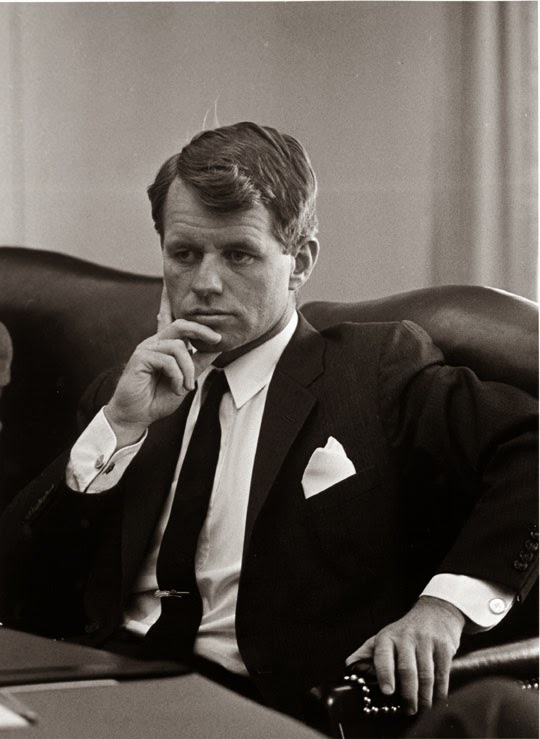
More recently, Robert Kennedy warned against a singular focus on GNP [Gross National Product].  Speaking a few months before his assassination, he pointed out that GNP “does not include the beauty of our poetry or the strength of our marriages, the intelligence of our public debate or the integrity of our public officials.  It measures everything, in short, except that which makes life worthwhile….”


Can we teach that lesson to our children without undermining their professional and financial success? 


The political speech that emanates from the dogma of the left and right will not help us understand how best to create a just society.  The liberal egalitarian view seeks to achieve equality by redistributing wealth.  The conservative libertarian view says we must respect freedom of choice.  If my choices lead to economic success and yours lead to starvation, so be it. 


In the end, the extreme libertarian view flies in the face of our Christian or humanist instincts.  However, the extreme opposite view – that wealth should be appropriated for the good of those less fortunate – undermines our economic prosperity and the value of hard work. 
 

Wealth is not, in and of itself, evil.  To describe those who attain it as greedy ignores the positive impact of our prosperity.  To be sure, if you are reading this post on your iPad while sitting in Starbucks, you are enjoying the fruits of a society built on capitalism. If you still have your teeth after age 60, have two cars in the garage and have time to play with your children, it is because of the value created by innovation and enterprise since the founding of our nation.


So, is it progress or is it greed?

WHO WILL LEAD?


WHO WILL LEAD?

Monday, March 24, 2014

CEOs are human beings too!


How do you spend your Friday evenings?  Do you occasionally enjoy a meal with friends?  We do, too.  Do you engage in in-depth discussions on macroeconomics?  Well, maybe not.

Last Friday, our dinner host was an economist.  It made for interesting, if intense, banter. And, then he said something that stopped me dead in my tracks. 

He theorizes that corporate CEO behavior is changing.  They are sitting on record amounts of cash and not investing it, he says.  “Sure,” I responded.  “In a lackluster economy, there is not enough demand to motivate investment.” 

His reply was not cast in the usual language of political dialog.  He didn’t accuse those Sun-Tzu quoting, take-no-prisoners corporate CEOs of hoarding cash because they’re greedy.  Rather, he asserted that there has been a cultural shift in corporate America away from risk-taking. 

Human beings are pre-programmed to be risk averse.  If you want to convince somebody to do something, make him or her afraid of the alternative.

“Vote for me!”  “Why?”  “Let me tell you what will happen if the other guy wins…”

There’s lots of math in economics.  But, at its core, it’s a behavioral science.  Economists derive mathematical models to predict the effect of human behavior.  Corporate CEOs are paid millions to maximize returns on their capital (factories, equipment and all that cash).  But, turnover in the executive suite is pretty high.  Fortune 500 CEOs lose their jobs in about four and a half years on average.  So, if they are now so afraid of losing their cushy jobs and lavish pay packages that they aren’t taking risk, it can’t be good for the economy.

Still, I’m not sure I buy his argument.

Big shot CEOs don’t keep piles of cash in their offices.  They save it in banks and buy bonds.  An enduring truth of economics is that savings = investment and investment creates jobs.  If a corporation buys municipal bonds, cities use it to maintain their infrastructure.  If they buy corporate bonds, other companies invest in R&D, capital equipment and real estate, creating jobs in the process.  Some of that money ends up in private equity funds where investment managers make bigger bets than those risk-averse CEOs and earn bigger rewards when they are successful. 

Leon Black, CEO of private equity firm The Apollo Group, made $540M last year.  Poor Apple CEO Tim Cook took home a measly $4.25M.  If you are an average middle class earner, there’s not much difference between the two.  How much money can you spend anyway?  Doesn’t Tim Cook live pretty well? Leon probably owns more assets than Tim (he paid $120M for a painting – Edvard Munch’s The Scream.)  But, so what?  There’s only so much time in the day and you can only be in one place at a time.  How much happier can Leon be than Tim?
The Scream by Edvard Munch

Apple is sitting on more cash than any company in the US, about $147B.  And, they have invested much of it in US Treasury bonds.  How’s that for risk-averse behavior?  Even when CEOs invest cash in their own companies, they often acquire other companies, implement new technology or build factories overseas – all activities that kill jobs in the US. 

Maybe my dinner companion is on to something.

If big corporations don’t or won’t create jobs, it is left to the small, entrepreneurial companies to do so.  And, the evidence shows that small businesses create jobs at a faster rate than big ones.

Yet, government impedes the progress of small businesses in many ways through initiatives like raising the minimum wage, requiring health insurance and extending family medical leave benefits. Whether you think those policies are good or bad, you have to recognize that they have a negative effect on the return that business owners can get from their investments. 

Business investment provides jobs and drives innovation that creates more jobs.  However, the tax code doesn’t reward you for investing in your business so much as investing in real estate and other assets. When business investment and hiring get more expensive, business owners are less likely to invest in factories and offices and more likely to invest in beachfront property. 

The rich always find ways to remain rich. Government policies that provide the wrong incentives and penalties don’t prevent the rich from getting richer.  They prevent the poor and middle class from becoming rich.

It’s enough to make me want to SCREAM:


WHO WILL LEAD?